Friday, February 5, 2021

Is it Illegal to Purchase a Home In Pre-Foreclosure in the State of Maryland?


Maryland enacted the Protection of Homeowners in Foreclosure Law (PHIFA) which has various rules restricting investors privately approaching homeowners in foreclosure to buy their home.
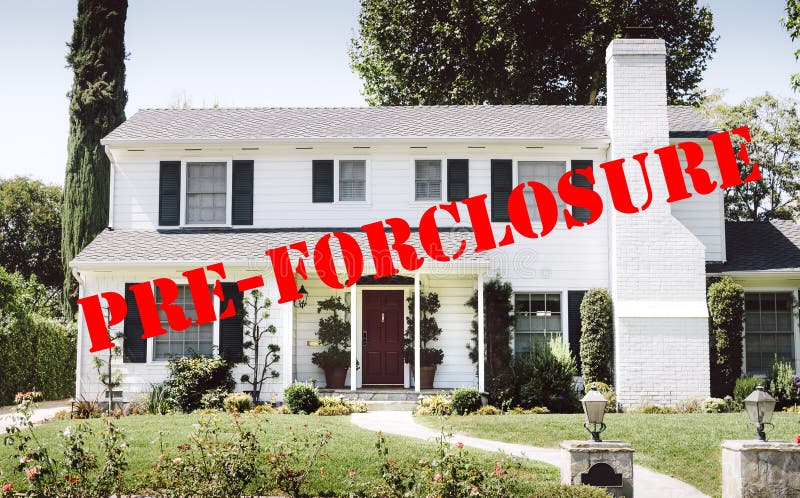

 Idylic Home with a Pre Forclosed Graphic - Corona Virius - Pandemic - Economy - Real Estate Market. All American home with a marking of Pre-Forclosure - White royalty free stock photography

Q – Is it Illegal to Purchase a Home In Foreclosure in the State of Maryland? 

A – NO! The Protection of Homeowners in Foreclosure Act of 2005, also known as (a/k/a) SB-761, and “The Maryland Foreclosure Law”, was passed by the Maryland Legislature and Signed into Law by Governor Ehrlich to protect homeowners from mortgage and foreclosure scams. The law specifically allows for Foreclosure Purchasers to purchase homes in foreclosure from homeowners. HOWEVER, the intent of the Legislature was to prevent investors who purchase foreclosures from dealing directly with homeowners and spells out the need for a “Foreclosure Consultant” to assist the homeowner and to provide for a true “arms-length” third-party to protect the interests of the homeowner(s) in dealing with investors seeking to purchase their homes during a time of foreclosure. Foreclosure investing continues to be completely legal (and profitable) for investors; however, it must be done in accordance with the Maryland Law. 


Q – How Does One Become a Maryland Foreclosure Consultant? 

A – The Protection of Homeowners in Foreclosure Act of 2005, also known as (a/k/a) SB-761, and Maryland Foreclosure Law, spells out specific tasks, which if performed by a person contacting a Maryland homeowner in foreclosure constitute acts of being a “Foreclosure Consultant”. In other words, what you do makes you a Foreclosure Consultant under the law and not necessarily what you put on your business cards. The problem, of course, is that as a “Foreclosure Consultant”, it is against the law to then turn around and purchase the home from the homeowner. 


Q – Can I be BOTH a Foreclosure Consultant and a Foreclosure Purchaser? 

A - The Protection of Homeowners in Foreclosure Act of 2005, specifically prohibits persons who act as Foreclosure Consultants from also being Foreclosure Purchasers within the same transaction. Unfortunately, the law as is currently written is unclear as to whether a Foreclosure Consultant can also become a Foreclosure Purchaser on different transactions. HOWEVER, the law does go to great lengths to spell out that a Foreclosure Purchaser can not use the services of a Foreclosure Consultant who is a family member, a blood relative, a spouse, or an entity controlled by the Foreclosure Consultant or related persons. In short, the law seeks to place a “WALL” between the Foreclosure Consultant and the Foreclosure Purchaser in an effort to protect the interests of the homeowner. Therefore, it is prudent to pick which side of the fence you want to be on. There is nothing in the law currently, which prohibits a Foreclosure Consultant from becoming a Foreclosure Purchaser in the future. 


Q – What are the penalties for breaking the law? 

A – Currently the law states that the penalties for infringement are a fine, up to $10,000, per occurrence and up to 3-years in jail, also per occurrence, Note: someone who breaks this law could unknowingly commit multiple occurrences of violating the law on one transaction. 


Q – Besides a $10,000 fine [per occurrence] and 3-years jail time [per occurrence] are there any other penalties to be aware of?
A – Yes, in addition to any criminal charges, an investor who violates the law will probably also face a civil suit in one of Maryland’s Circuit Courts. Specifically, In February 2006, Judge Steven I. Platt of the Circuit Court for Prince George's County, Maryland, issued an opinion and order in the case of Tommie Mae Smith v. Vincent Abell that the “investor” pay to the homeowner a $510,983, fine consisting of $10,968 in actual damages – the amount that she spent to pay the attorney for the mortgage company and her own attorney, and $500,000 in punitive damages, which of course was split with her attorney. The Maryland Bar has called civil actions against violators of the law, “An Emerging Area of Consumer Law". 

Thursday, February 4, 2021

Inoculation was introduced to America by a slave.


Inoculation was introduced to America by a slave.


Inoculation

Few details are known about the birth of Onesimus, but it is assumed he was born in Africa in the late seventeenth century before eventually landing in Boston. One of a thousand people of African descent living in the Massachusetts colony, Onesimus was a gift to the Puritan church minister Cotton Mather from his congregation in 1706.

Onesimus told Mather about the centuries old tradition of inoculation practiced in Africa. By extracting the material from an infected person and scratching it into the skin of an uninfected person, you could deliberately introduce smallpox to the healthy individual making them immune. Considered extremely dangerous at the time, Cotton Mather convinced Dr. Zabdiel Boylston to experiment with the procedure when a smallpox epidemic hit Boston in 1721 and over 240 people were inoculated. Opposed politically, religiously and medically in the United States and abroad, public reaction to the experiment put Mather and Boylston’s lives in danger despite records indicating that only 2% of patients requesting inoculation died compared to the 15% of people not inoculated who contracted smallpox.

Onesimus’ traditional African practice was used to inoculate American soldiers during the Revolutionary War and introduced the concept of inoculation to the United States. 

Wednesday, February 3, 2021

Little Known Black History Fact

Before there was Rosa Parks, there was Claudette Colvin.


Claudette Colvin

Most people think of Rosa Parks as the first person to refuse to give up their seat on a bus in Montgomery, Alabama. There were actually several women who came before her; one of whom was Claudette Colvin.

It was March 2, 1955, when the fifteen-year-old schoolgirl refused to move to the back of the bus, nine months before Rosa Parks’ stand that launched the Montgomery bus boycott. Claudette had been studying Black leaders like Harriet Tubman in her segregated school, those conversations had led to discussions around the current day Jim Crow laws they were all experiencing. When the bus driver ordered Claudette to get up, she refused, “It felt like Sojourner Truth was on one side pushing me down, and Harriet Tubman was on the other side of me pushing me down. I couldn't get up."

Claudette Colvin’s stand didn’t stop there. Arrested and thrown in jail, she was one of four women who challenged the segregation law in court. If Browder v. Gayle became the court case that successfully overturned bus segregation laws in both Montgomery and Alabama, why has Claudette’s story been largely forgotten? At the time, the NAACP and other Black organizations felt Rosa Parks made a better icon for the movement than a teenager. As an adult with the right look, Rosa Parks was also the secretary of the NAACP, and was both well-known and respected – people would associate her with the middle class and that would attract support for the cause. But the struggle to end segregation was often fought by young people, more than half of which were women. 

Image: Claudette Colvin by Phillip Hoose 


Saturday, January 23, 2021

States will soon start giving out $25 billion in rental assistance. How to apply


A $25 billion federal rental assistance fund will soon be disbursed to states, allowing those struggling amid the Covid pandemic to apply for the money.

By one estimate, 14 million Americans are behind on their rent during the crisis. Advocates say more rental assistance will be needed to stave off an unprecedented wave of evictions. After 10 months of record job losses and business shutdowns, rental arrears in the U.S. may be closer to $70 billion.

President Joe Biden is calling on Congress to allocate another $30 billion in housing aid, and on his first day in office announced an executive order that will extend the national ban on evictions through March.

For now, here’s what you need to know about accessing funds authorized by the $25 billion Emergency Rental Assistance Program.

Am I eligible?

To qualify for the assistance, at least one member of your household has to have lost income or incurred significant expenses due to the pandemic, or be eligible for unemployment benefits.

You will also need to demonstrate a risk of homelessness. In addition, your income level for 2020 can’t exceed 80% of your area’s median income, though states have been directed to prioritize applicants who fall at 50% or lower, as well as those who’ve been out of work for 90 days or more.

Expect to have to show in writing that you meet these requirements, such as with a past due rent or utility notice.

Are the funds available now?

States will have the funds by Jan. 26.

How do I apply?

“Where or how to apply will vary city by city,” 

Many areas have existing rental assistance funds, and it will be through one of these that you apply for the new aid. In other cases, programs will be created to disburse the money.

“Renters should contact local housing groups, their representatives or the local 211/311 lines to identify programs and learn how to apply.

Your landlord can also apply for you but must get your signature and provide you with a copy of the application.

How much could I get?

Renters can get help with up to 12 months of back rent and utility bills, and potentially another three months of support if there’s still money available. In some cases, you can get funds to cover future rent payments, but only if there’s a plan to address any debts first.

The funds are paid directly to your landlord or utility company.

Do I need to be behind on my rent to qualify?

No. But you can’t get money for future rent payments until any rental arrears have been paid off.

Can I apply for money just for utility or energy costs?

Yes.

I’m a homeowner. Can I apply for this assistance?

No. You must be a renter.

I’m facing eviction. What should I do?

Apply for the funds as soon as possible.

Also, understand your rights. Most renters should be allowed to stay in their homes at least through March thanks to a national ban prohibiting evictions for nonpayment of rent.

To evoke that protection, you’ll need to attest on a declaration form that you meet a few requirements, such as expecting to earn less than $99,000 in the 2020-2021 calendar year.

“If a tenant cannot pay the rent, they should provide the declaration to their property owner as soon as possible. In addition to the national eviction ban, some states have issued their own moratoriums, some of which are more comprehensive than the federal law. Get informed about any policies that apply to you.

Last, if your landlord ignores any of these rules, as some are doing, get a lawyer. You can find low-cost or free legal help with an eviction in your state at Lawhelp.org or TPF.Legal

One study in New Orleans found that more than 65% of tenants with no legal representation were evicted, compared with fewer than 15% of those who did have a lawyer in court.